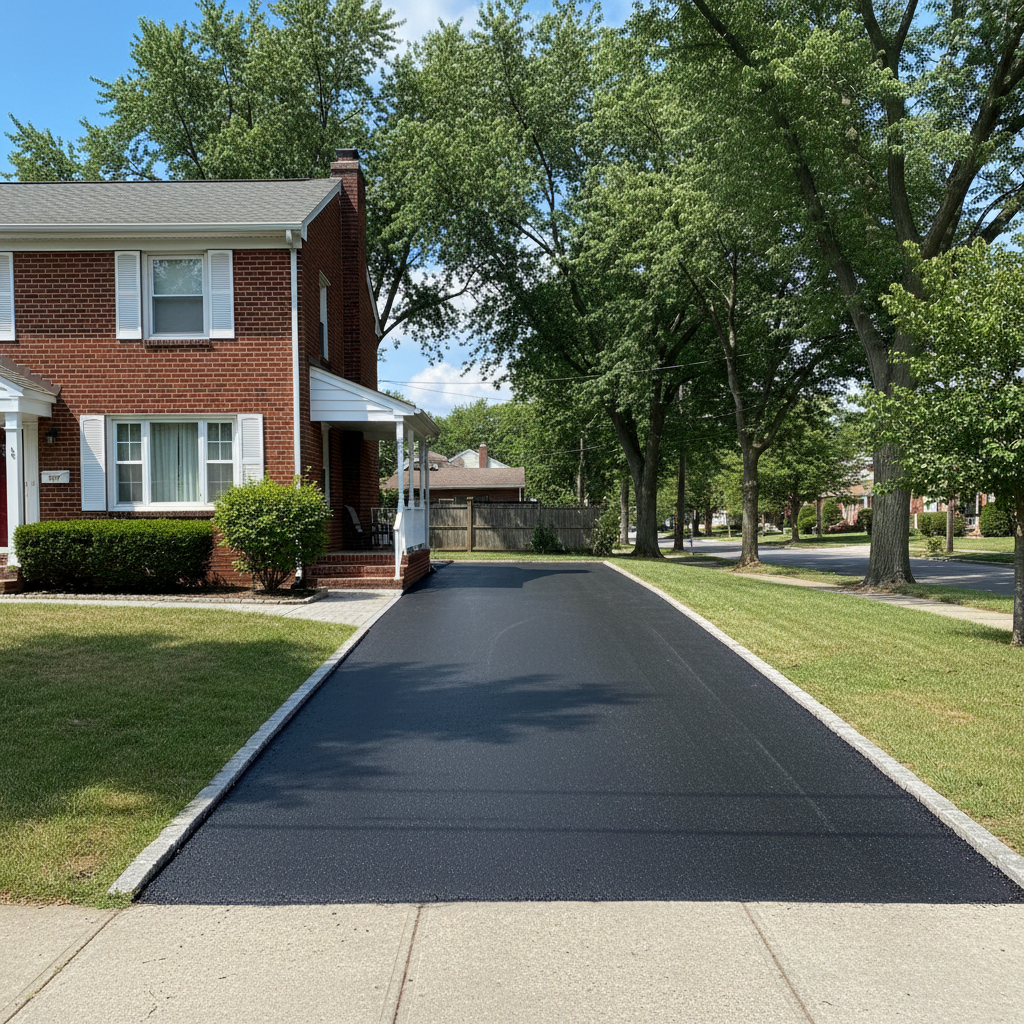
So, you're thinking about a new asphalt driveway, huh? Or maybe that old, cracked-up one finally needs some real attention. Good call. A solid driveway isn't just about looking good; it's about keeping your car safe, making your property look sharp, and, let's be honest, avoiding those annoying puddles that turn into ice slicks every winter. But the first thing everyone wonders is, "How much is this actually going to cost me?"
What Makes Asphalt Driveway Costs Go Up or Down?
Look, there's no single price tag for a new driveway. It's not like buying a loaf of bread, you know? A bunch of different things factor into the final bill. Here's what I look at when I'm putting together a quote for folks around here, whether you're in Riverdale or down in Soundview.
Size, Obviously: This is the big one. More square footage means more material, more labor. A standard two-car driveway, say 16x40 feet (that's 640 sq ft), will cost a lot less than some sprawling circular drive on a bigger property. We usually quote by the square foot, but it's not always a straight line. Smaller jobs sometimes have a higher per-square-foot cost because certain fixed costs are just there no matter what.
Existing Driveway Condition: Are we starting fresh on untouched ground? Or are we ripping out an old concrete slab or a crumbling asphalt mess? Demolition and removal really add to the time and cost. If we're just putting a new layer over existing asphalt that's in decent shape, that's cheaper. But if it's got big cracks, potholes, or drainage problems, we'll have to fix those first, and that means more work.
Site Prep & Drainage: This is where a lot of contractors cut corners, and believe me, you'll pay for it later. Proper grading, a good stone base (we're talking 6-8 inches of compacted gravel, usually), and making sure water drains away from your house are super important. If your yard has bad drainage, or if we hit a lot of rock while digging, that's extra work. Here in the Bronx, especially in some of the older spots with clay-heavy soil, we often need to do more extensive base work to make sure everything stays stable and doesn't crack from frost heave down the road.
Asphalt Thickness: Most residential driveways get 2-3 inches of compacted asphalt on top of that stone base. Some folks want 3-4 inches for extra durability, especially if they have heavier vehicles. Thicker asphalt means more material, more cost.
Accessibility: Can our trucks and equipment get in and out easily? If we have to hand-carry material or use smaller equipment because of tight spaces, that takes more labor time.
Permits: Sometimes, especially if you're changing the driveway's footprint or doing big work near the street, you might need a permit from the city. We'll handle that, but those permit fees become part of the overall cost.
What's a Realistic Price Range for a Bronx Driveway?
Alright, let's talk some numbers. Again, these are averages, and your specific job could be higher or lower depending on all those factors I just mentioned.
For a typical residential asphalt driveway in the Bronx, you're generally looking at:
New Installation (tear out old, new base, new asphalt): This is the most common and comprehensive job we do. For a standard 640 sq ft driveway (16x40 ft), you're probably in the range of $5,000 to $8,000. That breaks down to roughly $7.50 to $12.50 per square foot. Larger driveways might see the per-square-foot cost drop a bit, maybe down to $6.50-$10.00/sq ft for 1,000+ sq ft.
Asphalt Overlay (if existing base is good): If your current asphalt is just faded and has minor cracks but the base underneath is solid, an overlay can be a cheaper option. This might run you $3,000 to $5,500 for that same 640 sq ft driveway, or about $4.50 to $8.50 per square foot.
Resurfacing/Sealcoating: This isn't a new driveway, but it's really important for maintenance. Sealcoating typically costs $400 to $800 for a standard driveway, depending on its size and how much prep work it needs. It's a small investment that can extend the life of your asphalt by years.
Remember, these are for quality jobs done right. You might find someone cheaper, but you'll likely be sacrificing on material quality, base prep, or asphalt thickness, and that's just a recipe for premature failure.
What Should Be in Your Quote?
When you get a quote from Quantum Asphalt Solutions or any other reputable contractor, make sure it's detailed. It should clearly spell out:
Square footage of the area to be paved.
Scope of work: Is it a tear-out and replace? An overlay? A brand new install?
Base material: What kind of gravel, and how many inches will be compacted?
Asphalt thickness: How many inches of compacted asphalt?
Drainage solutions: Are any grading, swales, or catch basins included?
Permits: Who is responsible for pulling them?
Cleanup: What's included in site cleanup?
Warranty: What kind of warranty do they offer on their work?
How to Avoid Overpaying (and Getting Ripped Off)
This is where you've got to be smart. Don't just go with the cheapest guy, ever. Here's my advice:
Get Multiple Quotes: Three quotes is usually a good number. Just make sure they're all quoting for the same scope of work so you can compare apples to apples.
Check References & Reviews: Ask for local references. Look them up online. A good contractor will have a solid reputation.
Ask About Insurance: Make sure they're fully licensed and insured. You really don't want someone working on your property who isn't covered if something goes wrong.
Don't Pay Upfront: A reputable contractor won't ask for the full amount upfront. A reasonable deposit (25-30%) is normal, with the rest due once you're happy with the completed job.
Beware of Door-to-Door Solicitors: If someone shows up at your door saying they just finished a job down the street and have leftover material, run the other way. This is a classic scam, and you'll end up with a shoddy job that won't last six months.
Understand the Warranty: A good contractor will stand behind their work. Ask about their warranty on both materials and labor.
A new asphalt driveway is a big investment, but it's one that pays off in functionality and property value. Do your homework, ask the right questions, and don't rush into anything. You'll end up with a driveway that lasts for years.