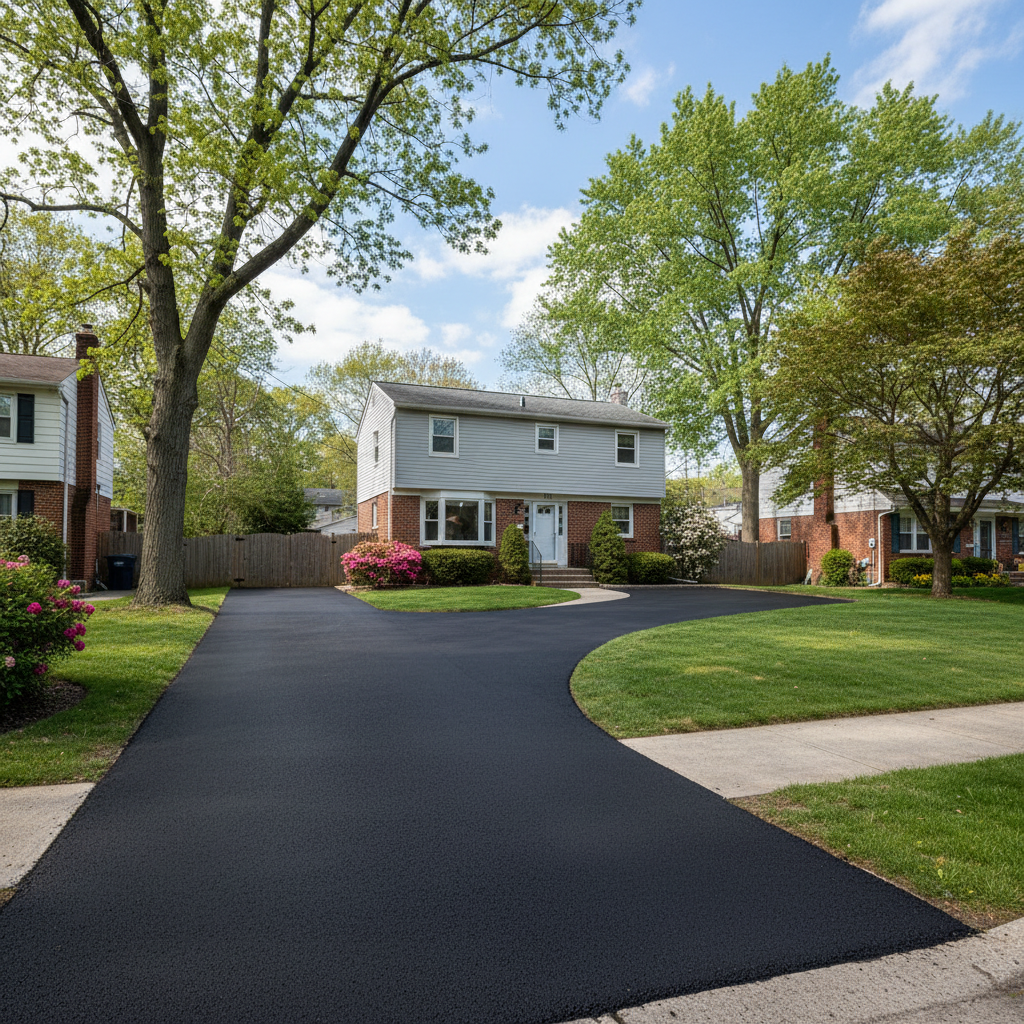
Your Bronx Driveway: Protect Your Investment
Let's talk about your asphalt driveway for a minute. You spent good money on it, right? Whether it's brand new or has seen a few Bronx winters, you want it to last. And let's be honest, with our wild weather – those freezing winters and scorching summers – asphalt really takes a beating around here. But you can do a lot to keep it in great shape and avoid calling me for a big repair sooner than you really need to.
Simple Steps to Extend Your Asphalt's Life
Making your asphalt last longer isn't rocket science, believe me. Still, it does need a little consistent effort. Think of it like taking care of your car; if you ignore it, well, it'll probably break down faster.
- Keep it Clean: This sounds super basic, but it's important. Leaves, dirt, and other gunk hold moisture against the asphalt. That can soften it over time. And oil or gas spills? Those are absolute asphalt killers. Clean them up right away with something absorbent, like cat litter, then scrub the spot with a stiff brush and some mild detergent. Don't forget to rinse it really well.
- Sealcoating is Your Best Friend: I really can't say this enough. Getting a sealcoat every 2-3 years, depending on how much traffic it sees and how much sun it gets, is absolutely critical. It's basically sunscreen for your driveway. It protects against harsh UV rays, stops water from getting in, and fights off those nasty chemicals from your car. Plus, it fills in tiny cracks before they turn into major headaches.
- Mind the Edges: Driveway edges are often the weakest spots. If you've got soft shoulders or grass growing right up to the edge, it can start to crumble. Keep those edges supported, maybe with a gravel border, to stop them from breaking off.
- Control Drainage: Water is asphalt's biggest enemy. You need to make sure rainwater drains *off* your driveway, not *onto* it or, even worse, *under* it. If you see puddles forming, especially near your house or garage, that's a big red flag. Bad drainage can erode the sub-base and lead to serious cracking.
- Avoid Heavy Loads: Try not to park really heavy vehicles, like RVs or construction equipment, on your residential driveway for long periods. All that weight can cause depressions and cracks, especially when it's warmer and the asphalt is softer.
Warning Signs You Can't Ignore
You don't need to be an expert to spot problems. Your driveway will actually tell you when it's hurting. Here's what to keep an eye out for:
- Cracks: Small, hairline cracks are pretty normal as asphalt gets older. But if they're getting wider, deeper, or starting to connect and form a network (what we call alligator cracking), you've got trouble brewing. These let water seep into the base, which is a total disaster with our Bronx freeze-thaw cycles.
- Potholes: This one's pretty obvious, isn't it? A pothole means the asphalt has completely failed in that spot. Don't ignore it; it'll only get bigger and more dangerous.
- Fading and Discoloration: If your asphalt is looking gray instead of that nice deep black, it means the top layer is oxidizing and losing its protective qualities. This is a clear sign it's time for sealcoating.
- Soft Spots or Depressions: If you notice areas that are sinking or feel soft when you walk on them, it usually points to an issue with the sub-base underneath. This is a serious problem that needs professional attention.
- Loose Aggregate: Are you seeing a lot of loose stones on the surface, especially after a car drives over it? That means the binder in the asphalt is failing.
When to Call Quantum Asphalt Solutions
Look, I'm not going to tell you to call me for every little thing. Some small cracks you can probably patch yourself if you're handy. But there are definitely times when you really need a pro to step in.
You should call us when:
- You see extensive alligator cracking covering a large area. This usually means the base is compromised.
- Potholes are forming quickly or getting very large.
- You have significant drainage issues that are causing standing water on or around your driveway.
- There are large depressions or soft spots, which point to sub-base failure.
- The entire surface is crumbling or breaking apart, not just a few small spots.
- You're just not comfortable doing the repair yourself, or you want the job done right the first time to make sure it lasts.
Don't wait until your driveway is a total mess. Tackling these issues early can save you a ton of money and headache down the road. A well-maintained driveway not only looks good but also adds value and safety to your home.